A private practice for tech founders · Eight online seats

You carry the whole company — and there’s no one you can talk to about it.

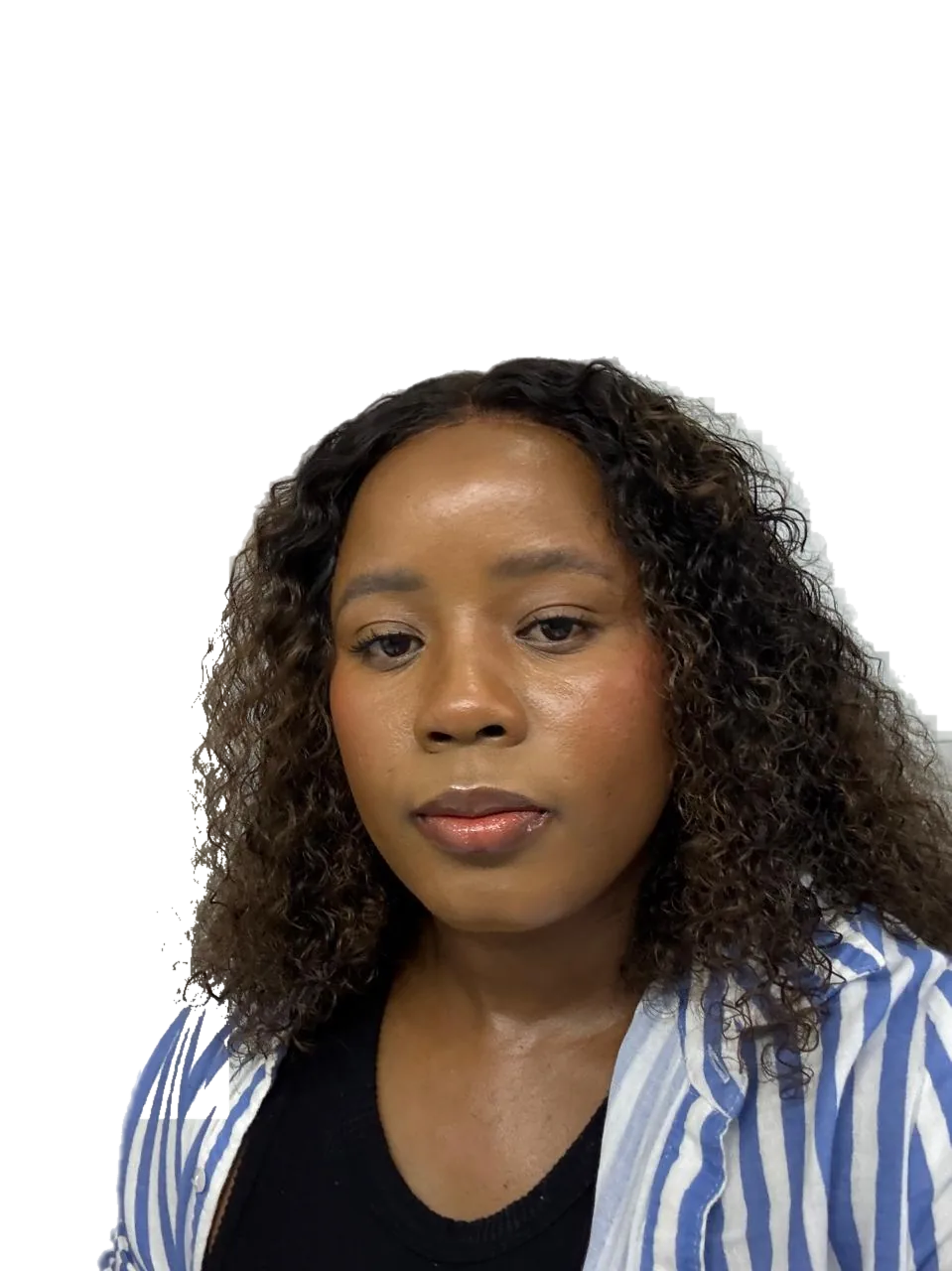
I'm Mwende. I keep a small private practice for founders — a standing place for the conversations you can't take to your board, your team, or your partner. No content. No cohort. No pitch. Just a room that holds.

02
Hours a week, yours
24h
The 2am line
08
Seats, ever
00
Names disclosed
The Weight

The round closes. The congratulations fade. The real work begins — and there's no one to think it through with.

Suddenly there is more to carry than ever — investors and their KPIs, a team growing faster than you can steady it, a market that doesn't care what you raised — and no time to talk about any of it.

And the carrying is the part nobody prepared you for. Every decision matters. Every setback feels personal. Switching off is nearly impossible — some nights you barely sleep, and some mornings are worse than that. You gave up comfort and rest to chase this thing, and you'd do it again. But the hardest part isn't the hours. It's holding the responsibility when no one else can hold it with you. And even if you found the time to say any of this out loud, look around the room:

Your team
can't be fully open with the person who signs their payroll — and you can't be fully open back. The room changes when the boss walks in. You feel it every day.
Your co-founder
is carrying their own half of the weight — and performing for the same investors you are. Some things can't be said to the person you have to keep believing with.
Your friends
outside the game don't understand the stakes. The ones inside it — founders like you — are quietly competitors. Both get the highlight reel.
Home
whoever waits there — a partner, family, or no one yet — didn't sign up to carry a company. At some point "how was work" stops being a real question — and you stop giving real answers.

So it all stays in your head — the burn chart, the hire that isn't working, the doubt at 2am — looping, unspoken. Your brain has no outlet. That's not weakness. It's a structural problem — and structure can be fixed.

The Outlet

A thinking room isn't a luxury. It's how your brain is built to work.

You build systems for everything — infrastructure, sales, hiring. This is the system for the mind that runs all of it. And none of it is mysticism:

Naming calms the alarm

Neuroscientists call it affect labeling: put a stress into words and the amygdala — the brain's alarm system — measurably quiets, while the prefrontal cortex, where judgment lives, comes back online. Saying it out loud isn't venting. It's regulation.

Open loops eat compute

Psychologists have known for nearly a century that unfinished, unspoken problems keep looping in working memory. Every worry you can't voice is a background process burning capacity your company needs. Language closes the loop — decades of expressive-writing research link it to better sleep, sharper focus, steadier health.

The rubber-duck effect

Every engineer knows it: explain the problem out loud and the answer arrives mid-sentence. Another mind exposes the gaps your own can't see. Half my job is being the duck that asks the right question back.

Hills shrink in company

In a well-known psychology study, people judged a hill less steep when a friend stood beside them. The brain recalculates the size of a challenge when it isn't alone with it. Same mountain, accurate slope — that's what a standing session does.

The Room

So I built the room.

The responsibility stays yours — it should. But carrying it and carrying it alone are two different things. This practice walks next to you while you do the heavy part: a partner with no equity in your decisions, no stake in your image — just in you still being able to think.

Our sessions

Two 45-minute sessions a week, at times you choose from my calendar. Use them as thinking room, war room, or confession booth — I don't need you to be impressive here.

The 2am line

Thirty minutes of my week is reserved for whatever you send between sessions — a voice note, a draft, the thing that woke you. I answer within a day, usually much faster — so the night before the board meeting, you're not waiting for your next session.

Eight seats

The offline practice stays small; online I'm opening eight seats — not as a marketing trick, but because this only works if I have room to genuinely carry what you bring me. When it's full, it's full.

The Rule

What you say to me leaves without your name on it. The practice is named for that rule.

Before we begin, I sign the confidentiality agreement in your favor — not the other way around. There is no client list, no testimonial wall, and no logos page. If we ever pass each other at a conference, I'll follow your lead. The absence of names on this site is not a gap in my marketing. It's proof of the service.

Who You'd Be Talking To
Mwende
M
portrait.webp goes here

Mwende — it means love and warmth.

I'm Edel Mwende. Founders call me Mwende.

My name means love and warmth in my mother tongue — and long before this was a practice, it was already my job. I'm the person people find at 2am. I've done formal peer counseling for years; the listening is trained, not improvised.

I also sit in your chair — today, not in a past life. I'm co-founder and COO of an enterprise AI company in the Microsoft for Startups portfolio, building foundation infrastructure for autonomous AI in regulated industries. Fundraising, deployments, PR, payroll, the daily weight of promises made to investors and people you'd hate to let down — I carry it the same way you do.

And this room isn't new — it's just newly open. For years I've done this work offline, by referral, with founders at every stage — first raise, exit, IPO. These eight seats are the first time the practice has an address online.

I've also had the years nobody announces. I've been scammed. I've carried debt that felt like a verdict. I kept building. So when it gets dark in your company, you won't be explaining darkness to a spectator. You'll be talking to someone who has sat in it — and can still think there.

From People I've Sat With

Shared with permission. Names withheld — that's the point.

The Terms

No surprises. This is exactly how it works.

The retainer
A flat monthly retainer. No hourly meter running under our conversation. I'll tell you the figure when we speak — and I'll tell you just as plainly if I don't think this is worth it for you.
The season
We start with three months. Not to trap you — the first weeks are us learning each other, and the work compounds. After that, it's month to month.
Scheduling
Once your payment is confirmed, I share my calendar and you choose the times that fit your week. The sessions are yours to place.
First session
Our first session is 25 minutes. It's a focused fit check: what you're carrying, what support you need, and whether this room is right for you.
The rule
I sign first. In your favor. Before you've told me anything.
Leaving
After the first season, if it stops helping, you leave — with a conversation, not a form. No lock-ins, no exit paperwork.
The boundary
I'm not a therapist, and I won't pretend to be one. If what you're carrying needs clinical care, I'll say so honestly and help you find the right person — promptly, and without judgment.
If This Found You at the Right Time

If this is where you are, write to me.

You probably already know whether you have a room like this or not. If you do, protect it. If you don't, write to me and we'll start with one confidential first session: 25 minutes, no deck, no follow-up sequence. You'll know quickly if this helps. If it doesn't, you leave with one clearer hour and no pressure after.

— Mwende

I answer within one business day. And in case it needs saying: what you write to me is already under the rule.